
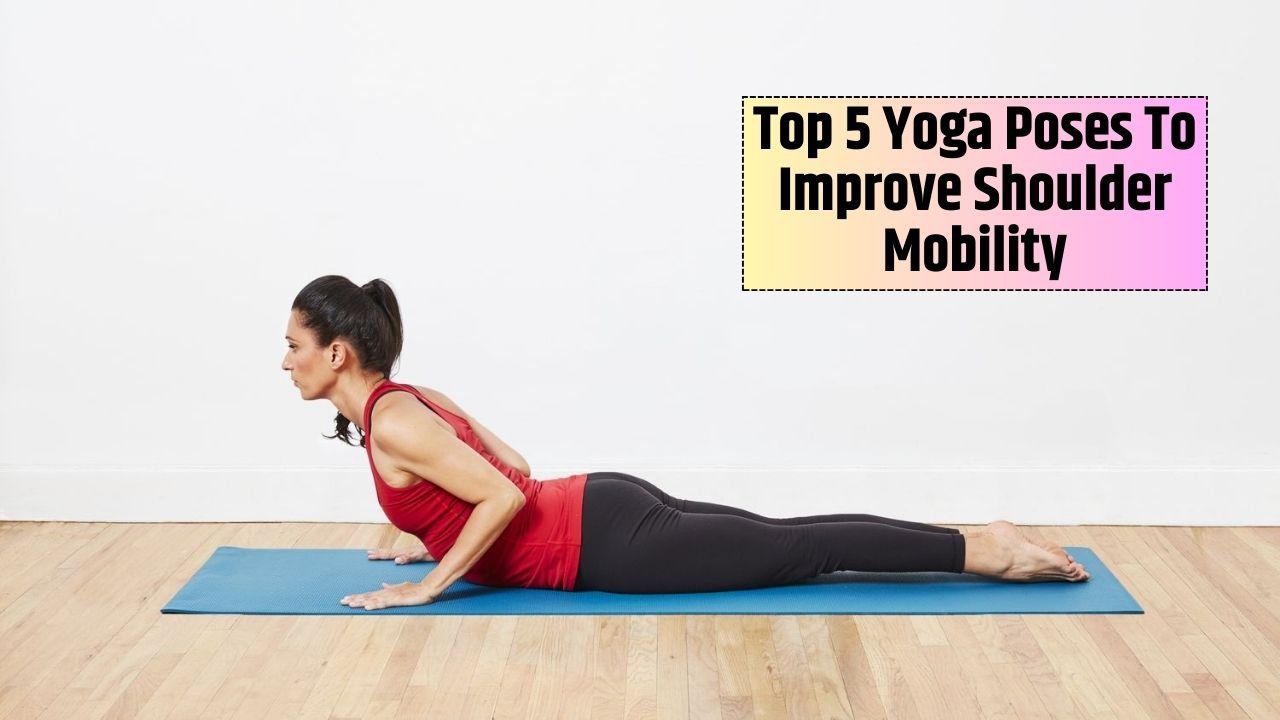

Stiff shoulders creep in quietly. One day you notice it’s harder to reach overhead, or your neck feels tight halfway through the workday. Hours spent hunched over screens pull the shoulders forward, shorten the chest, and weaken the upper back. Before long, mobility drops and those small aches begin radiating into the neck or upper spine. The fix isn’t just stretching—it’s rebuilding balanced support. Yoga does that beautifully by strengthening and opening the shoulders at the same time, using breath as the steadying force. These five poses help restore mobility without strain.
Downward Facing Dog
Downward Facing Dog is a classic for a reason: it lengthens the spine, opens the shoulders, and strengthens the arms all in one sweep. Starting on hands and knees, lift your hips into an inverted V and press your palms firmly into the mat. Rotate the upper arms slightly outward—this tiny cue creates space across the front of the shoulders.
Keep your knees bent if your hamstrings tug; the priority is a long, supported spine. As you breathe and push the floor away, the shoulders begin to unwind naturally. Stay here for several deep breaths, feeling the combination of strength and expansion.
Puppy Pose
Think of Puppy Pose as Down Dog’s gentler cousin, isolating the shoulder stretch without requiring full weight-bearing strength. From hands and knees, walk your hands forward and lower your chest toward the floor. Your hips stay stacked over your knees, ensuring the stretch moves directly into the shoulders and upper chest.
Relax your forehead or chin to the ground. The sensation should feel spacious, not sharp. Puppy Pose is especially effective after long hours at a desk when the chest muscles have tightened and the upper back has flattened from fatigue.
Thread the Needle
Thread the Needle shifts attention to rotation and the muscles between the shoulder blades. Begin on all fours, then slide one arm underneath your chest with the palm facing up. Lower your cheek and shoulder to the mat.
The twist encourages mobility through the upper back while releasing tension that travels from the spine into the shoulders. It’s a gentle reset for the muscles that get overworked from holding you upright at a screen all day. After several breaths, switch sides and notice any difference in ease between the left and right shoulder.
Dolphin
Dolphin is where strength meets mobility. Starting on your forearms, elbows shoulder-width apart, lift your hips into a shape similar to Downward Dog. With weight in your forearms instead of your hands, the shoulders work harder to stabilize.
Press the floor away and feel the upper back muscles engage. This pose strengthens the very muscles that keep the shoulders healthy long-term. At the same time, the lift through the hips helps open the shoulders gradually. Hold for a few breaths before lowering with control—your shoulders will know they worked.
Cow Face Arms
Cow Face Arms creates a deep, targeted stretch across both shoulders, one internally rotated and the other externally rotated. Sitting comfortably, lift one arm overhead and bend it so the hand reaches down your back. Bring the other arm behind you, reaching upward toward your top hand.
If your fingertips don’t touch, loop a strap or towel between the hands. Avoid collapsing forward; keep your chest open and your breath smooth. This pose is particularly helpful for anyone who notices difficulty reaching overhead or behind the body.
Building Lasting Mobility
Shoulder mobility doesn’t return in a single session—it builds slowly through consistency. Quick, forceful stretching often backfires, irritating the joint rather than freeing it. These poses work because they combine gentle opening with supportive strength.
Breathing is the secret ingredient. When the body senses calm, muscles naturally relax, allowing a safer range of motion. Practicing these poses a few times a week can improve posture, reduce neck tension, and make everyday motions—like reaching a high shelf or carrying groceries—feel easier.
The goal isn’t extreme flexibility. It’s comfort. Confidence. Movement that feels natural again. With steady practice, these five yoga poses can soften stiff shoulders and strengthen the muscles that keep them healthy for the long run.
FAQs
How often should I do these shoulder mobility poses
Two to four times per week is ideal for steady, lasting improvement.
How long should I hold each pose?
Aim for 20–40 seconds or 5–8 slow breaths in each posture.
Are these poses safe for shoulder pain?
They’re generally gentle, but if pain increases sharply or feels unstable, ease out and modify.
Can these poses improve posture?
Yes strengthening the upper back and opening the chest supports healthier alignment.
Do I need any equipment?
A towel or strap can help in Cow Face Arms, but otherwise no props are required.
