

Strong legs aren’t just about aesthetics or powering through a tough workout—they’re the quiet engines behind almost everything you do. They support posture, protect your knees, keep you stable on uneven ground, and become even more essential as you age. I often tell beginners: when you want to build a steady, reliable body, you start from the floor. Once the legs are stable, everything above them starts falling into place with surprising ease.
Yoga doesn’t get enough credit for building leg strength. People see it as gentle, slow, maybe even passive. But ask anyone who’s held a deep lunge or stayed in Chair Pose longer than they planned—yoga builds strength that stays with you. It does so without the joint impact of jumping, running, or heavy lifting. Done consistently, even five poses can reshape how your legs feel and how confidently you move through your day.
Below are five of the most effective yoga poses for stronger, more balanced legs.
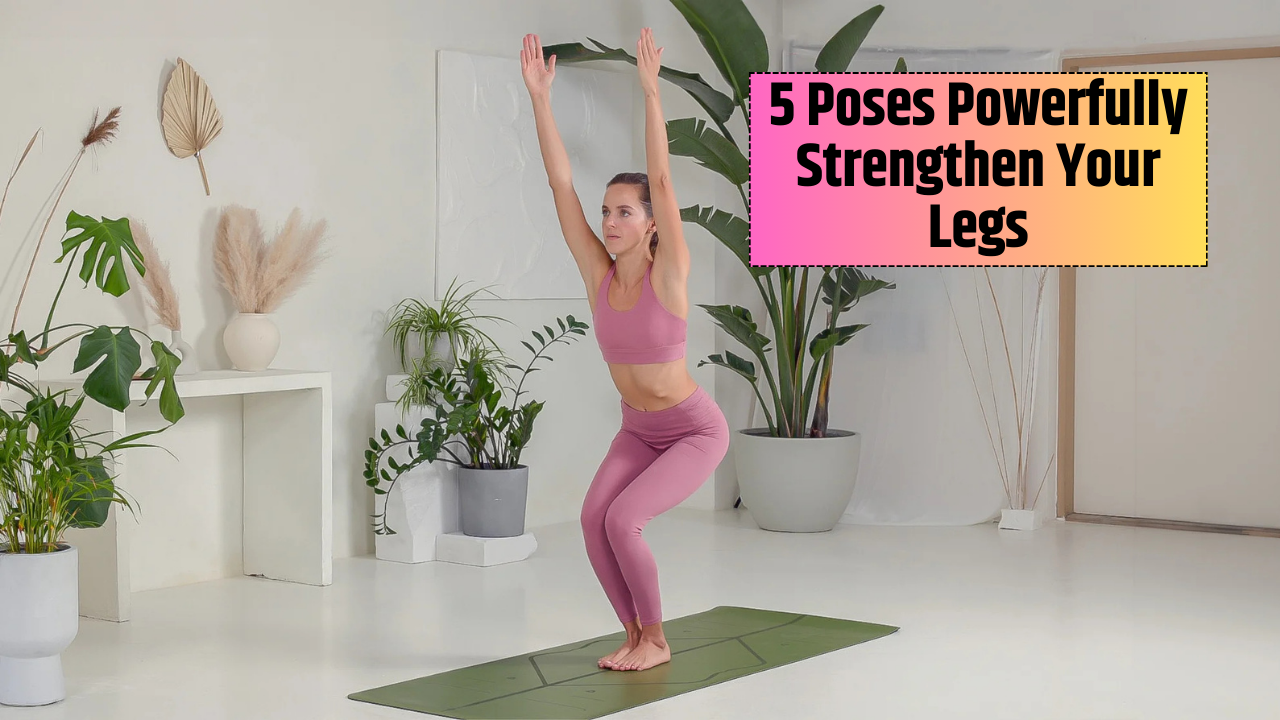
Chair Pose (Utkatasana)
Start with your feet together or hip-width apart. Sit back as if lowering into a chair, arms reaching overhead, chest lifting.
Chair Pose lights up the quadriceps, hamstrings, glutes, and calves all at once. For many beginners, the thighs start trembling almost immediately—and that’s a good sign. Shaking simply means the muscles are firing. Hold for five to eight slow breaths.
Protect your knees by shifting your weight into your heels and keeping your knees from sliding past your toes. Over time, Chair Pose builds the kind of leg endurance that shows up in everyday life—like climbing stairs without effort.
Warrior II (Virabhadrasana II)
Step one foot back, turn it slightly outward, bend your front knee, and extend your arms in opposite directions. Gaze over your front hand.
Warrior II is a powerhouse for the thighs and hips. The front leg stabilizes through strength, while the back leg anchors you in place. It teaches your legs to work independently yet fluidly—one holding, one grounding. Stay for five to ten breaths per side. If you feel warmth rising through your hips and thighs, that’s exactly what you want: muscular endurance building layer by layer.
Crescent Lunge (High Lunge)
From standing, step one foot back into a long stance. Keep your back heel lifted and your front knee directly above the ankle. Lift your arms overhead.
Crescent Lunge challenges balance and leg strength simultaneously. The lifted heel forces your front leg to work harder, while the back leg strengthens through a long, active stretch. Engage your core to stay steady. If the pose feels wobbly, shorten your stance slightly. Even 20–30 seconds per side builds noticeable strength.
Goddess Pose (Utkata Konasana)
Stand wide, toes turned outward. Bend your knees deeply and lower your hips while keeping your chest open. Bring your arms into a goalpost shape.
Goddess Pose focuses on the inner thighs and glutes—muscle groups that dramatically impact knee stability. Keep your knees tracking in line with your toes to avoid strain. Staying low for several breaths is tough but incredibly effective. A few gentle pulses add intensity quickly and safely.
Bridge Pose (Setu Bandhasana)
Lie on your back with knees bent, feet flat. Press through your heels and lift your hips, engaging your glutes and hamstrings.
Bridge Pose may feel like a break after the standing work, but it’s a deep strength-builder for the posterior chain—glutes, hamstrings, and the muscles supporting your lower back. Draw your thighs inward slightly to activate the inner legs. Hold for five to eight breaths, then lower slowly. Repeat two or three rounds for added strength.
Why Leg Strength Matters
Healthy, powerful legs reduce pressure on your knee and hip joints, improve balance, and make daily movement feel lighter. Strong legs also help correct posture, which affects everything from how you walk to how you breathe.
Yoga builds strength isometrically—through holding, stabilizing, and controlling the body in stillness. This kind of muscle work improves endurance and joint stability without pounding on the knees or ankles. Over time, your movements become smoother, steadier, and more supported.
How Often to Practice
Three to four sessions per week is enough to see meaningful changes. Even a short, focused 15-minute routine can produce results within a few weeks. If you sit for long hours, these poses help counteract tight hips and weakened leg muscles caused by inactivity.
Simple Progress Tips
Breathe slowly, especially when the poses feel intense.
Keep your alignment steady—don’t rush into deeper bends too soon.
Start with shorter hold times if needed; consistency will build strength naturally.
Remember: strength that lasts isn’t built quickly. It’s built intentionally.
Wrap-Up
Strong legs don’t just improve how you look—they transform how you move. These five yoga poses may seem straightforward, but practiced regularly, they develop stability from the ground up. Over time, you’ll notice improved posture, smoother balance, and legs that feel capable and powerful every single day.
FAQs
How long before I notice stronger legs?
Most people see improvement within three to six weeks of consistent practice.
Can beginners safely do these poses?
Yes. Each pose can be modified with shorter holds or smaller ranges of motion.
Is yoga enough to build serious leg strength?
For functional strength, stability, and endurance—absolutely. Heavier muscle gain may require weights, but yoga builds balanced power.
What if my knees hurt in these poses?
Check alignment, keep weight in your heels during bending poses, and avoid letting knees collapse inward. Modify depth if needed.
How many rounds should I do?
One to two rounds of each pose is plenty for beginners. Increase as your stamina improves.
