

It doesn’t take a doctor’s note or a physiotherapy appointment to spot the pattern: long hours in a chair, barely moving except to grab coffee or shift positions, eventually turn the hips into something that feels more welded than jointed. Ask any office worker, long-haul driver, or student buried in deadlines stiff hips creep in quietly, and by the time you notice, even standing up feels like unfolding a rusty hinge. Yoga, though, has this uncanny newsroom-worthy comeback story — simple poses that reverse tightness without dramatic effort, just slow breathing and a bit of floor space.
Why Hip Flexibility Dictates How the Rest of the Body Moves
In wellness circles, the hips get called the body’s “storage unit” because they tend to hold stress and immobility long after the mind has moved on. When hip flexors tighten, the lower back takes the hit, gait changes subtly, and posture begins its gradual collapse. You’ll see it everywhere commuters leaning forward, seniors shuffling, runners complaining about backache that’s actually hip tension in disguise.
The good news? Most of this is reversible. And yoga practiced consistently, not competitively encourages the kind of slow, controlled opening that revives movement without sending beginners into shock.
Let’s walk through the poses that instructors often rely on when someone walks into a class saying, “My hips feel like they’re locked.”
Butterfly Pose
Butterfly Pose is a staple for a reason. You sit upright, bring the soles of your feet together, let your knees drop outward, and suddenly you feel the groin, inner thighs, and deep hip muscles waking up from their long slumber. The movement isn’t forceful — in fact, trainers often say the more relaxed your breathing, the easier the hips release.
Some people add a gentle “flapping” motion of the knees. Others simply hold the pose and soften their upper body. Either way, it’s one of the simplest and safest ways to introduce mobility to a stiff lower body.
Low Lunge Pose
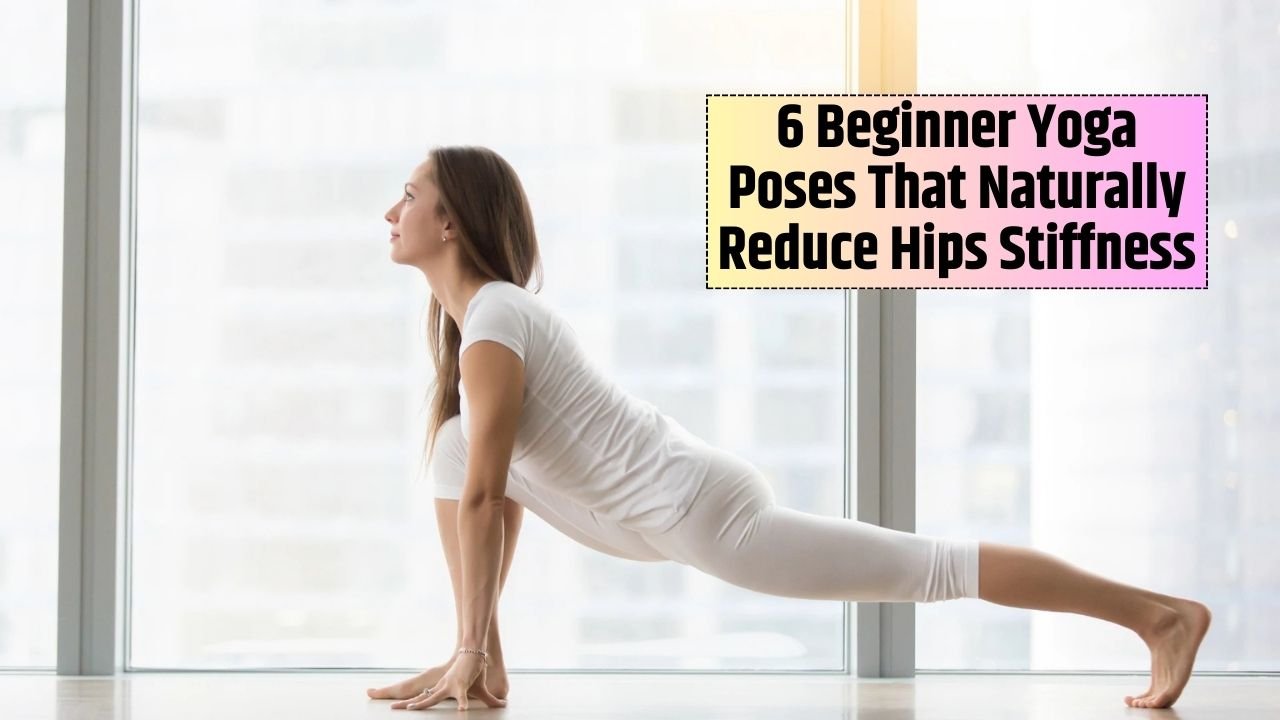
If Butterfly opens the sides of the hips, Low Lunge goes straight after the front — the hip flexors. These are the muscles that shorten every time you sit, so naturally they rebel when you try to lengthen them again.
Stepping one foot forward and lowering the opposite knee creates a deep, targeted stretch. Beginners tend to lean too far; a smarter approach is to keep the spine tall and press the hips forward only enough to feel the pull without strain. Done regularly, Low Lunge not only increases mobility but reinforces balance and stability around the pelvis, which pays off in everyday walking, lifting, and even sleeping positions.
Pigeon Pose
Ask any yoga instructor which pose unlocks stubborn hips the fastest, and you’ll hear one name repeatedly — Pigeon. It goes deep into the glute muscles and smaller stabilizers that get tight from sedentary routines.
There’s no need to fold dramatically like those picture-perfect Instagram yogis. The beginner version keeps the front shin angled and the back leg extended, with the torso upright or gently leaning forward. The release is slow and sometimes emotional — tension stored in the hips can surprise you — but it’s among the most transformative poses in this entire lineup.
Malasana (Garland Pose)
Somewhere along the shift into modern life, humans forgot how to squat naturally. Malasana revives it. Dropping into this deep, supported squat stretches the hips, ankles, and lower back while strengthening the core and inner thighs.
What surprises people is how grounding the posture feels. It’s a position used instinctively in many cultures — for resting, cooking, lifting — but rarely practiced in Western routines. Restoring this movement pattern brings back a kind of mobility that almost feels ancestral.
Figure Four Stretch
The Figure Four stretch looks easy — lie on your back, cross one ankle over the opposite knee, and pull the legs toward you. But the sensation in the outer hip can be profound. It targets the piriformis, a tiny muscle with big responsibilities, especially for people with tight hips or lower-back complaints.
It’s safe, beginner-friendly, and popular in both yoga studios and physical therapy clinics. No drama, no strain — just a slow unwinding of tension.
Child’s Pose
Child’s Pose doesn’t scream “hip opener” the way Pigeon does, but anyone who’s sat back onto their heels after a long day knows exactly why it belongs here. As the torso folds forward and the hips sink toward the heels, the entire lower body relaxes.
It encourages circulation, releases the spine, and gently stretches the hip joints without pressure. This is often the pose people return to when a practice session feels overwhelming. It’s an exhale in physical form.
What These Poses Do Together
Individually, each pose targets a different region around the hips — the flexors, rotators, groin, glutes, and lower back. But together, they operate like a mobility toolkit: one opens, another lengthens, another strengthens, and another restores balance.
Stick with them for a couple of weeks and you’ll notice:
• Sitting feels less cramped
• Walking strides get longer
• Lower-back discomfort decreases
• Posture naturally shifts upright
• Movements feel smoother instead of forced
This isn’t magic. It’s anatomy responding to consistency.
Hip-Opening Yoga Poses Overview
| Pose | Target Area | Key Benefit |
|---|---|---|
| Butterfly Pose | Inner thighs, groin | Opens hips gently and improves joint movement |
| Low Lunge Pose | Hip flexors, pelvis | Lengthens tight front-hip muscles |
| Pigeon Pose | Glutes, deep hip rotators | Releases stored tension and improves flexibility |
| Malasana Squat Pose | Hips, ankles, lower back | Restores natural squat mobility |
| Figure Four Stretch | Outer hips, glutes | Reduces tightness from prolonged sitting |
| Child’s Pose | Hips, spine, lower back | Calms the body and enhances relaxation |
Fixing stiff hips doesn’t require expensive equipment or hour-long workouts. It’s a combination of gentle stretching, mindful breathing, and repeating poses that slowly convince the body to let go. These yoga postures aren’t flashy, but they’re effective especially when practiced for 15–20 minutes a day. Over time, the stiffness loosens, posture improves, and the body begins to move the way it was designed to.
Patience is the quiet hero here. Stick with it long enough, and the hips repay you in mobility, comfort, and a surprising sense of ease throughout the day.
FAQs
How long does it take to improve hip stiffness with yoga?
Most people begin noticing changes within 2–4 weeks of consistent practice.
Can beginners safely practice hip-opening yoga?
Yes. These poses are gentle and designed for all experience levels.
Is yoga better than static stretching for stiff hips?
Often, yes, yoga blends mobility, breathing, and stability, making the results more sustainable.
When is the best time to practice these poses?
Morning or evening works best, but anytime you feel tightness is perfectly fine.
Can yoga reduce hip pain caused by long sitting hours?
Absolutely. Regular practice loosens the muscles that tighten from prolonged sitting.
