

Most people imagine wellness as some grand transformation—a juice cleanse here, a hardcore workout there—but the truth is far less dramatic. Real, everyday wellness is stitched together from tiny choices: how you stand, how you breathe, how you move when no one’s watching. Yoga slips neatly into that space. It doesn’t demand perfection or flexibility; it just asks you to show up. Some days you’ll crave energy, other days you’ll want stillness. These nine poses meet you wherever you land, helping you stretch what’s tight, strengthen what’s weak, and settle a busy mind. And the longer you practice them, the more they start to feel like anchors in the middle of your daily chaos.
Mountain Pose
There’s something grounding about standing still on purpose. Mountain Pose looks simple—feet planted, arms relaxed, spine long—but it teaches awareness in a way few poses do. Spread your toes. Feel the weight shift across the soles of your feet. Let your chest rise slightly without forcing anything.
People underestimate how much posture affects mood and energy. After a long day of slouching over a laptop or drifting between meetings, Mountain Pose realigns the body like a quiet reset button. A few slow breaths here sharpen your focus and bring you back into your body instead of letting your brain live two steps ahead.
Cat-Cow
Move down to hands and knees and begin the gentle flow of Cat-Cow. As you inhale, your belly drops and the spine arches; as you exhale, everything rounds upward. It’s rhythmic, easy, almost meditative if you let it be.
Cat-Cow warms up the spine and opens stiff areas in the back and neck—two regions that take the brunt of stress and poor posture. It’s a perfect morning pose when the body feels creaky or an evening ritual after your shoulders have fought gravity all day. Think of it as oiling the hinges of your spine.
Downward Facing Dog
From hands and knees, lift the hips to form the familiar inverted V of Downward Facing Dog. Bend your knees if you need to. Press evenly into your palms and feel the length through your spine first; the legs will follow in time.
This pose wakes the body up. It stretches the hamstrings, calves, shoulders, and back while strengthening the arms. Because blood flows toward the upper body, many people report a quick, natural burst of energy. Downward Dog is one of those “do-it-all” poses—good on tired days, good on energized days, always reliable.
Warrior II
Step one foot back and sink into Warrior II. Arms extended, chest open, gaze steady over your front hand. There’s a quiet determination in this pose, a kind of strength that isn’t about force but about presence.
Warrior II builds leg endurance and balance, yes—but it also trains focus. When your thighs are quivering and your mind wants out, you learn to breathe through discomfort without collapsing. That mental steadiness often follows you off the mat, helping you face daily stressors with a little more grit.
Triangle Pose
With your feet wide, straighten your front leg and reach forward until your spine can’t go any farther—then tilt into Triangle Pose, one hand on your shin or the floor, the other stretching up.
Triangle stretches the sides of the torso, lengthens the hamstrings, and challenges your balance in a deceptively gentle way. There’s no need to touch the floor; the goal is spaciousness, not depth. Over time, this pose improves coordination and helps counter the asymmetry we build from one-sided habits like carrying bags or sitting crookedly.
Bridge Pose
Lie on your back, plant your feet, and lift your hips. Bridge Pose strengthens the glutes and lower back while opening the chest—an underrated combination for anyone who sits most of their day.
That chest opening is more powerful than it looks. Modern life pulls us inward: hunching, scrolling, rounding. Bridge Pose pushes back, literally expanding the front of the body and encouraging fuller, deeper breaths. Many people feel a quick boost in mood after holding the pose for a few slow inhales.
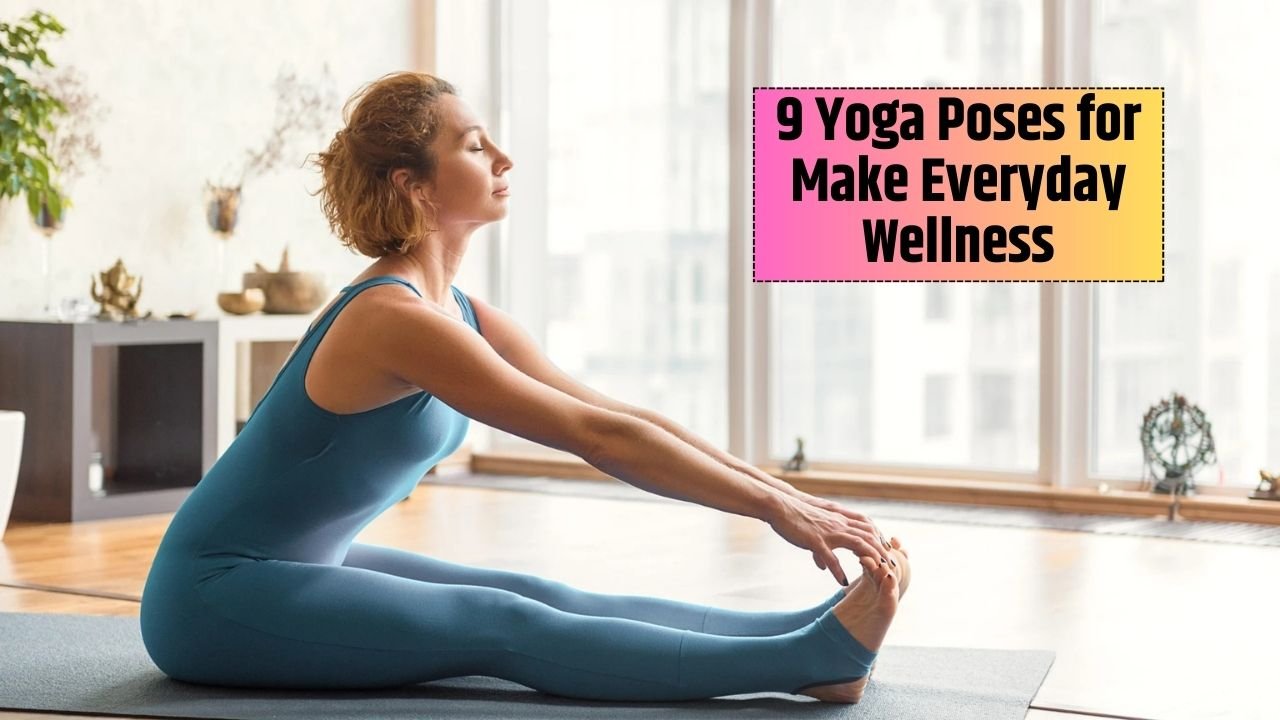
Seated Forward Fold
Extend your legs, lift your spine tall, and fold forward gently—knees bent as much as you need. This isn’t a fight against tight hamstrings; it’s an invitation for the nervous system to soften.
Forward folds help quiet the mind. They slow the breath, release lower-back tension, and create a moment of inward reflection. If your day has felt chaotic or emotionally charged, this pose can help you reclaim a sense of calm and mental clarity.
Supine Twist
Lie on your back, draw one knee in, and guide it across your body. Keep both shoulders anchored. The twist is gentle, supported, and just deep enough to coax the spine into releasing tension.
Twists are unsung heroes for digestion and lower-back comfort. They wring out stiffness from the torso and help the body transition toward relaxation mode. Many people use Supine Twist as part of a nighttime wind-down routine because it signals the body to let go.
Child’s Pose
Finish in Child’s Pose: knees soft, hips sinking back, forehead resting. A humble pose, but often the one people return to when they need comfort without explanation.
In Child’s Pose, the breath expands into the back, soothing the nervous system almost instantly. It’s a posture of surrender, of grounding, of quiet. Even a minute here can feel like an exhale after a long, demanding day.
Making Yoga Part of Daily Life
You don’t need a 60-minute class or a perfect routine. Ten to twenty minutes is enough to stretch what’s tight, strengthen what’s underused, and reconnect with your breath. Move through these poses at your own pace. Notice how your body responds. Notice what changes—or doesn’t—without judgment.
Consistency trumps intensity. What matters is showing up often, not pushing hard. With steady practice, you’ll improve posture, mobility, strength, and stress resilience. More importantly, you’ll build a relationship with your body based on awareness rather than expectation. And that awareness? That’s where authentic wellness begins.
Quick Reference Table
| Pose | Main Benefit | When It Helps Most |
|---|---|---|
| Mountain Pose | Posture, balance, grounding | Anytime you need focus |
| Cat-Cow | Spinal mobility, warm-up | Morning stiffness |
| Downward Dog | Full-body stretch, energy | Midday reset |
| Warrior II | Strength, stability, focus | During active sessions |
| Triangle Pose | Hip and hamstring flexibility | Mid-practice or cool-down |
| Bridge Pose | Chest opening, glute strength | After long sitting |
| Seated Forward Fold | Calming, hamstring release | Overwhelming days |
| Supine Twist | Spinal relief, digestion support | Before bed |
| Child’s Pose | Nervous system relaxation | Anytime |
Everyday wellness doesn’t require dramatic shifts—just small, intentional movements you return to consistently. These nine poses offer a balanced blend of strength, mobility, and calm, supporting both your physical and mental well-being. Whether you practice them in the morning to wake up or in the evening to wind down, they help you build a steady rhythm of care that strengthens your body and softens your stress. Show up, breathe, move gently, and let wellness unfold from repetition rather than pressure.
FAQs
Do I need to be flexible to start yoga?
No. Yoga improves flexibility over time, but it doesn’t require it to begin.
How long should I hold each pose?
Aim for 3–5 deep breaths in active poses and up to a minute in restorative ones.
Can yoga replace traditional workouts?
It complements strength and cardio training but doesn’t replace them entirely.
How often should I practice these poses?
Three to five times per week creates steady benefits.
Do I need special equipment?
A mat helps, but household items like pillows or towels can substitute when needed.
