

Modern life isn’t exactly built for movement, is it? We sit through traffic, meetings, Netflix marathons, and somehow expect our bodies to stay limber. Spoiler: they don’t. The truth is, our hips tighten, shoulders hunch, and even a simple reach for the top shelf starts to feel like a stretch test.
But here’s the good part — you don’t need to twist into a pretzel or join an advanced yoga retreat to regain your flexibility. A handful of poses, done with patience and consistency, can help you unlock a body that moves freely again.
Below are six essential yoga poses to improve flexibility safely and effectively whether you’re a beginner or just trying to touch your toes without feeling like you’re tearing something.
1. Downward-Facing Dog (Adho Mukha Svanasana)
Think of this as yoga’s all-purpose reset button. Downward Dog lengthens the spine, opens tight shoulders, and stretches those hamstrings and calves that’ve been sitting all day.
How to do it:
Start on all fours. Tuck your toes and lift your hips up and back, forming an upside-down V. Hands stay shoulder-width apart, feet hip-width apart. Press your heels toward the floor (but it’s fine if they don’t touch).
What it stretches: hamstrings, calves, shoulders, spine
Pro tip: Keep a bend in your knees if your hamstrings are tight — focus on elongating your spine instead of locking your legs.
2. Seated Forward Bend (Paschimottanasana)
This is the classic “touch-your-toes” stretch — but yoga-style, it’s more about patience than pushing. Beyond loosening hamstrings, it also calms your nervous system and relieves back tension.
How to do it:
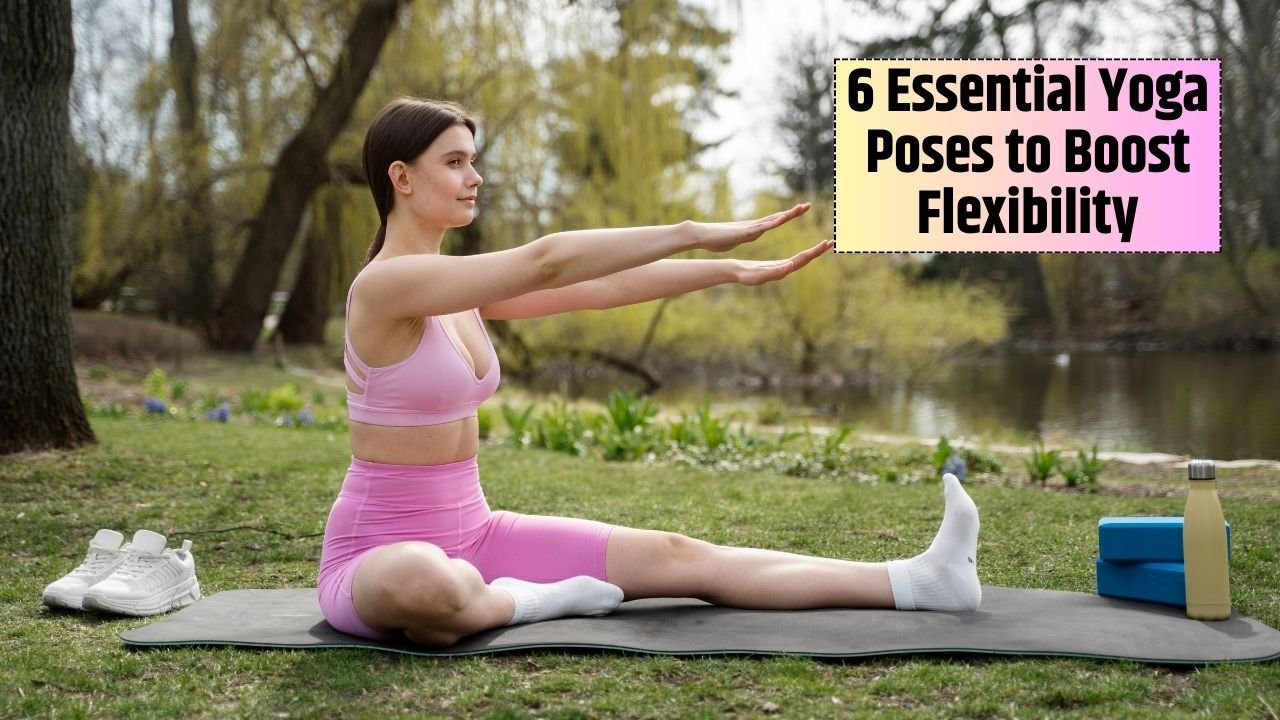
Sit tall with legs extended straight in front. Inhale, lengthen your spine. Exhale, hinge forward from the hips (not the lower back), reaching for your feet or shins.
What it stretches: hamstrings, calves, lower back
Pro tip: Use a yoga strap or towel around your feet to avoid straining. Keep a soft bend in your knees — flexibility grows over time, not through force.
3. Butterfly Pose (Baddha Konasana)
If your job involves a chair (and whose doesn’t?), this pose is your hip-saving hero. It releases tension in the groin and inner thighs, helping your pelvis stay mobile and balanced.
How to do it:
Sit with the soles of your feet touching, knees falling open to the sides. Hold your feet and sit tall. Gently press your knees down with your elbows if it feels comfortable.
What it stretches: inner thighs, groin, hips
Pro tip: Sit on a folded blanket or cushion to elevate your hips — it helps maintain a straight spine and deepens the stretch safely.
4. Low Lunge (Anjaneyasana)
Tight hip flexors are a silent epidemic, courtesy of our desk-sitting culture. The Low Lunge directly targets that stiffness while also engaging your legs and core.
How to do it:
From a kneeling position, step one foot forward with the front knee over the ankle. Keep your back knee on the ground. Square your hips, lift your arms overhead, and sink gently into your front hip.
What it stretches: hip flexors, quads, hamstrings
Pro tip: Place a folded towel or yoga mat under your back knee for comfort. Focus on stability before depth.
5. Cat-Cow Pose (Marjaryasana–Bitilasana)
This simple spinal flow is often overlooked — yet it’s the perfect warm-up before any deeper stretch. Cat-Cow improves spinal mobility and preps your body for all other yoga movements.
How to do it:
Start on hands and knees. Inhale and arch your spine, lifting your chest and tailbone (Cow). Exhale, round your spine and tuck your chin (Cat). Continue for 8–10 slow rounds.
What it stretches: spine, shoulders, neck
Pro tip: Let your breath guide the movement. Don’t rush — the slower you go, the more your body opens.
6. Pigeon Pose (Eka Pada Rajakapotasana)
Here’s the deep one — the pose that makes you realize how much tension you’ve been storing in your hips. It’s intense, yes, but also deeply releasing when done correctly.
How to do it:
From Downward Dog, bring one knee forward behind your wrists. Extend your back leg straight behind you. Keep your hips square and either stay upright or fold forward over your front leg.
What it stretches: hips, glutes, piriformis, lower back
Pro tip: Place a yoga block or folded towel under the hip of your bent leg if you feel uneven or strained. The goal is release, not pain.
Flexibility Routine: 20-Minute Flow
| Pose | Duration |
|---|---|
| Cat-Cow Flow | 2–3 minutes |
| Downward-Facing Dog | 1 minute |
| Low Lunge (each side) | 1 minute per side |
| Seated Forward Bend | 2 minutes |
| Butterfly Pose | 2 minutes |
| Pigeon Pose (each side) | 2 minutes per side |
| Legs-Up-the-Wall (cooldown) | 3–5 minutes |
Repeat 3–5 times weekly for the best results.
How to Get the Most Out of Your Practice
1. Go slow.
You can’t rush flexibility — forcing a stretch only causes injury. Breathe into resistance instead of fighting it.
2. Breathe deeply.
Each exhale helps your muscles release tension. Your breath is your best tool — not brute strength.
3. Use props.
Blocks, straps, pillows — they’re not signs of weakness. They’re how smart practitioners deepen safely.
4. Stay consistent.
Five short sessions a week beat one long Saturday stretch-fest every time. Your body adapts best with repetition.
5. Warm up first.
Cold muscles resist movement. Begin with light mobility work or a few rounds of Sun Salutations before going deeper.
Stretch Beyond the Mat
Flexibility isn’t about touching your toes it’s about how easily you move through daily life. The fewer aches you feel getting out of bed or bending for your shoes, the better.
Yoga’s not a quick fix, but it’s consistent magic. Commit to 20 minutes a few times a week, breathe through the awkward bits, and your body will surprise you. Before long, that stiffness you’ve been carrying? It’ll start to melt one pose at a time.