
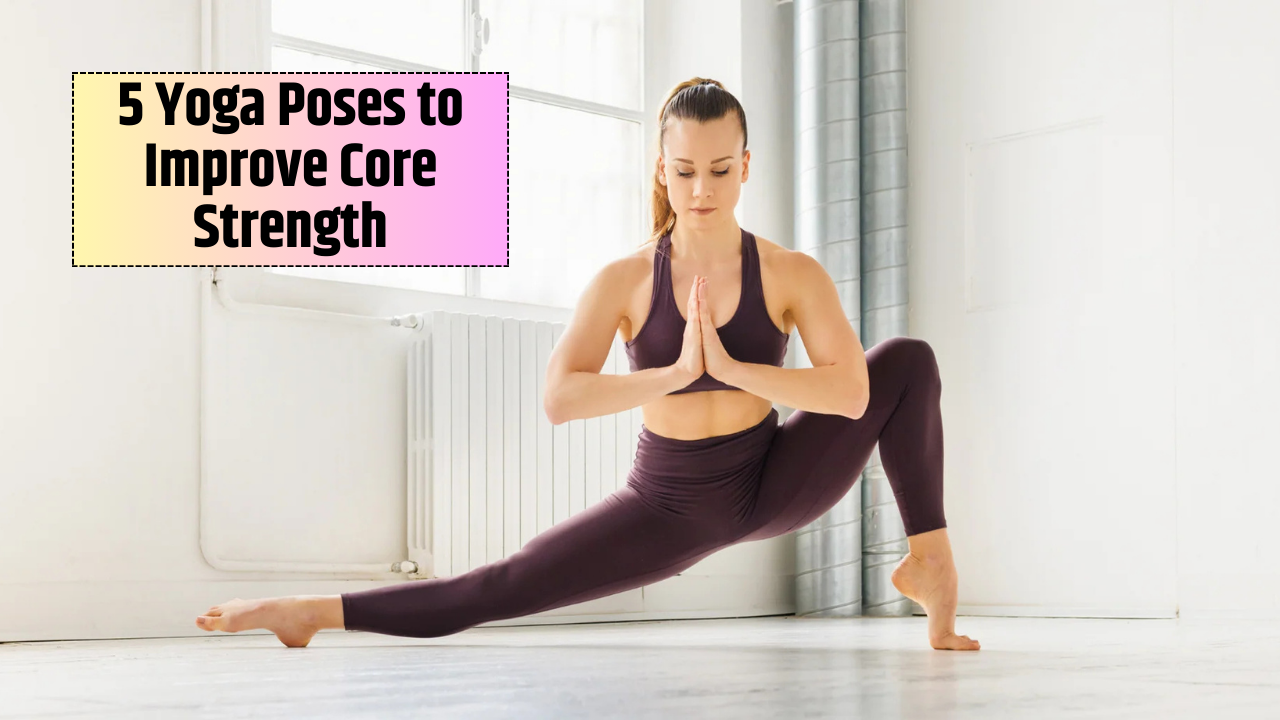

A strong core isn’t just the part of your abs that shows up on good-lighting days. It’s your body’s engine room—the stabilizer, the quiet protector, the thing keeping your spine from collapsing when you round over your laptop for the fourth hour straight. It’s what holds your posture tall, powers your twists and turns, and keeps your lower back from begging for mercy. And yet, most people still treat core training like it begins and ends with crunches.
Here’s the truth: if you want a core that actually works in real life—not just on gym floors—yoga wins. Every time.
Yoga trains the deep muscles, the stabilizers, the connectors. The ones that decide whether you move with confidence or with compensations. And unlike machines or repetitive crunch routines, yoga builds strength that’s intelligent, balanced, and sustainable.
Let’s break down the Top 5 Yoga Poses for Core Strength—the ones that work deeper, smarter, and safer than anything you’ll find in the ab aisle.
Why Yoga Outperforms Crunches for Core Power
Crunches hit the surface-level abs. Great for aesthetics, not so great for function. They don’t do much for the transverse abdominis, obliques, multifidus, diaphragm, pelvic floor—all the players that collectively stabilize your entire torso.
Yoga recruits all of them. Every posture asks your core to brace, lengthen, balance, and breathe. You’re not just lifting your upper body; you’re coordinating the entire kinetic chain.
Why that matters:
- Activates deep stabilizers responsible for spinal protection
- Improves posture and reduces low-back strain
- Enhances balance and coordination
- Builds endurance without repetition-based strain
- Strengthens the mind–body connection through controlled breath
Trainers call this functional strength—the kind that shows up in daily life, not just in workout selfies.
1. Boat Pose (Navasana)
Boat Pose is not here to make friends. It demands everything: abs, hip flexors, spine stabilizers, mental focus. You’re essentially holding a sit-up mid-sit-up, but with control and conscious breathing instead of sheer panic.
What it builds:
- Upper and lower ab power
- Hip flexor endurance
- Deep core stability
- Postural awareness
How to do it:
- Sit tall, legs extended.
- Lean back slightly without rounding.
- Lift your legs until you form a “V”.
- Extend your arms forward.
- Breathe—this part matters.
Hold for 20–40 seconds.
Muscles at work: abs, hip flexors, spinal stabilizers.
2. Plank Pose (Phalakasana)
Plank is the quiet assassin of core training. No movement, no noise—just pure stability work from your shoulders down through your hips.
Why it’s unmatched:
- Activates deep core layers
- Engages shoulders, lats, glutes
- Builds full-body tension and control
Cue to remember: imagine drawing your navel toward your spine (without holding your breath). That alone fires the transverse abdominis.
Hold for 30–60 seconds.
3. Side Plank (Vasisthasana)
Most people forget about their obliques until their back starts complaining. Side Plank fixes that.
What it targets:
- Obliques
- Glute medius
- Lateral hip stability
- Shoulder integrity
How to do it:
- From Plank, shift onto one hand.
- Stack your feet.
- Raise the opposite arm.
- Keep your hips lifted and aligned.
Want extra credit? Lift the top leg. Your side body will immediately question your life choices.
4. Dolphin Pose
Looks like a shoulder stretch. Feels like a core workout. Dolphin Pose strengthens the deep abdominals while prepping your body for inversions.
Why it works:
- Fires upper and lower abs
- Stabilizes shoulders
- Encourages spine alignment
How to perform:
- Start on forearms and knees.
- Tuck your toes and lift your hips.
- Draw your belly in—consistently.
Hold for 30–45 seconds.
Tip: keep the tension in your core, not your neck.
5. Forearm Plank With Leg Lift
This one is for when you’re ready to level up. Introducing instability forces your core to work harder without twisting or sagging.
Develops:
- Deep stabilizer endurance
- Hip symmetry and control
- Pelvic stability
How to do it:
- Start in Forearm Plank.
- Lift one leg slowly.
- Hold for 10–20 seconds.
- Switch sides.
If your body starts trembling—that’s success.
Quick Comparison Table
| Yoga Pose | Core Activation | Difficulty | Best For |
|---|---|---|---|
| Boat Pose | Very High | Medium | Ab endurance |
| Plank Pose | High | Easy | Core stability |
| Side Plank | Very High | Medium | Oblique strength |
| Dolphin Pose | High | Medium | Deep core + shoulders |
| Forearm Plank + Leg Lift | Extremely High | Advanced | Control + symmetry |
Yoga vs. Gym Core Workouts
| Aspect | Yoga Poses | Crunches |
|---|---|---|
| Core Engagement | Full system | Surface abs only |
| Injury Risk | Low | Moderate |
| Posture Support | High | Low |
| Flexibility Benefit | Yes | No |
| Long-Term Effect | Sustainable | Temporary |
Yoga isn’t just about powering your core—it’s about organizing your body around it.
How Often Should You Practice?
You don’t need hour-long routines. Precision beats duration every time.
| Level | Frequency | Duration |
|---|---|---|
| Beginner | 3–4×/week | 20–30 sec per pose |
| Intermediate | 4–5×/week | 30–45 sec per pose |
| Advanced | Daily | 45–60 sec per pose |
Consistency is the real flex. Alignment over ego, every time.
The Real Goal: Function, Not Flash
A strong core isn’t about visible abs—it’s about how your body feels when you move. Yoga trains the stabilizers that protect your spine, support your posture, and keep you grounded, flexible, and balanced.
Over time, you’ll notice:
- Better movement control
- Reduced back pain
- Better breathing patterns
- More confidence in daily motion
So when the person next to you is hitting their 200th crunch, just smile. You’ll be building strength that lasts—strength that actually matters.
FAQs
How long until I feel core strength improvements?
Most people feel a difference within 2–3 weeks with consistent practice.
Do I need equipment for yoga core training?
Nope your bodyweight is enough.
Will yoga replace traditional ab workouts?
For many people, yes. It trains deeper and safer.
What if I have lower-back pain?
Yoga is often helpful, but start slow and avoid poses that create compression.
Can beginners do all five poses?
Absolutely modify as needed and focus on form, not height or duration.
