
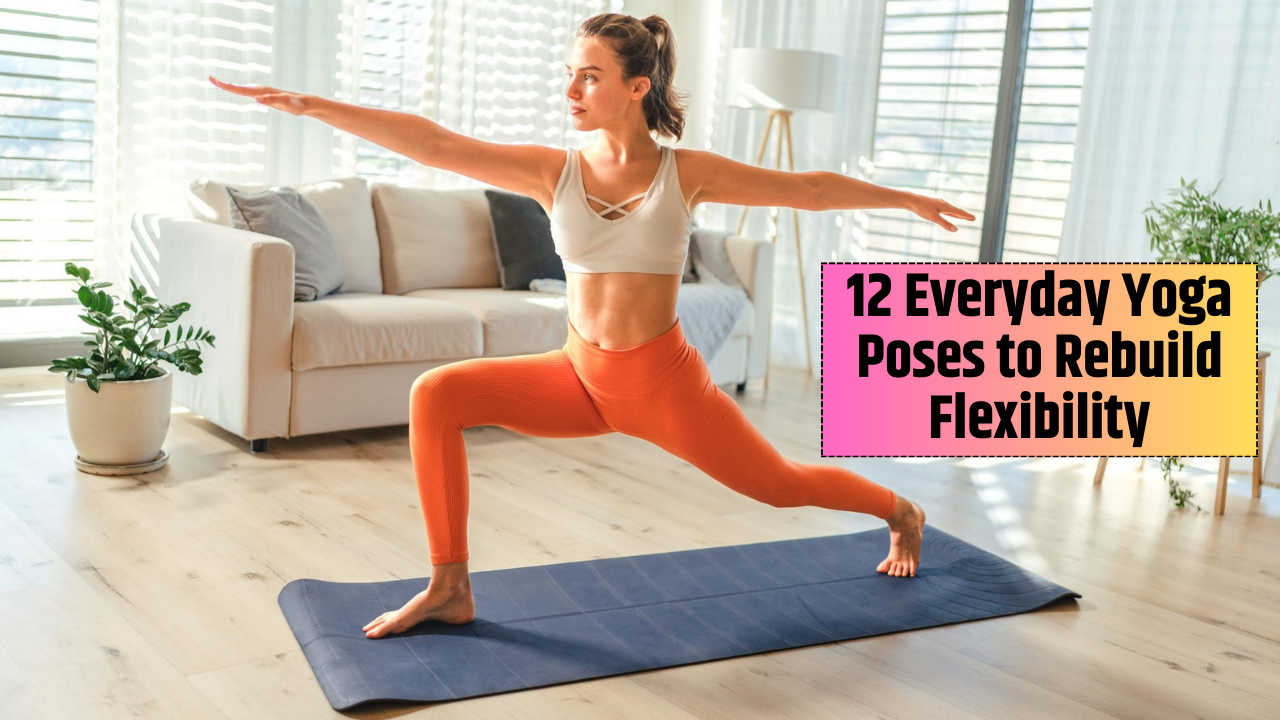

You probably don’t think about it much, but every time you bend over to tie your shoes, reach for something resting just out of reach on the top shelf, or hop off a curb while juggling a coffee, you’re depending on flexibility and mobility more than you realize. They’re the quiet workhorses of daily life. And yet, modern routines chip away at them faster than most people care to admit. Hours hunched over screens, commuting in barely-passable sitting positions, or slouching into couches that swallow your posture whole… bit by bit, everything tightens. Movements that once felt effortless now arrive with resistance or at least a polite protest from your back.
Here’s the part that should feel like a sigh of relief: restoring flexibility doesn’t require boutique studios, special equipment, or some guru-level instructor. Yoga — simple, consistent, at-home yoga — can bring back the ease your body is craving. With a handful of poses, you can quietly rebuild what modern life erodes.
Why Flexibility and Mobility Matter at Every Age
Flexibility is just your muscles’ ability to lengthen on command. Mobility is your joints’ freedom to glide through their full range without feeling rusty. Together, they’re the difference between moving smoothly through your day or feeling like you’re operating an outdated machine.
And let’s dispel a common myth: age isn’t the culprit. Stagnation is. If you repeatedly move only in short ranges — or barely move at all — the body adapts to that reduced demand. Hips stiffen, shoulders round, ankles lose their bounce, and before long, your personal “normal” shrinks.
Yoga interrupts that cycle. Unlike static stretching, yoga asks your muscles to lengthen and support you at the same time. It’s not just stretch-and-relax; it’s controlled movement, activation, breath, and awareness — a recipe your body responds to like dry soil meeting rain.
12 Yoga Poses to Boost Flexibility and Mobility
| Pose | Primary Targets | Key Benefit |
|---|---|---|
| Downward Facing Dog | Hamstrings, calves, shoulders, spine | Elongates the back body and frees shoulder movement |
| Cat-Cow Pose | Spine, neck, core | Reawakens spinal mobility and posture cues |
| Standing Forward Fold | Hamstrings, calves, lower back | Releases back tension and boosts circulation |
| Low Lunge | Hip flexors, thighs | Counteracts sitting and opens the front hips |
| Butterfly Pose | Inner thighs, hips, lower back | Improves hip mobility and relaxes pelvic tension |
| Cobra Pose | Spine, chest, shoulders | Strengthens the back and reverses slouching |
| Seated Forward Bend | Hamstrings, spine, hips | Calms the nervous system while lengthening muscles |
| Pigeon Pose | Glutes, hip rotators, lower back | Deeply opens tight hip musculature |
| Triangle Pose | Legs, spine, shoulders | Blends stretching with active stability |
| Garland Pose | Ankles, hips, lower back | Restores natural squat mobility |
| Bridge Pose | Hips, back, chest | Opens the front body while activating glutes |
| Child’s Pose | Spine, hips, shoulders | Restorative full-body reset |
1. Downward Facing Dog
Part stretch, part strength builder, Downward Dog is the pose that quietly does the work of three or four exercises at once. It lengthens the backs of your legs, decompresses the spine, and gently asks your shoulders to open. Perfect after long desk hours or as a quick reset between meetings.
2. Cat-Cow Pose
A simple move with surprising influence. Flowing between these two shapes nudges your spine awake, loosening the stiffness that accumulates overnight or after too much chair time. And because the breath leads the movement, it naturally steadies the nervous system.
3. Standing Forward Fold
More than a hamstring stretch, this is a full back-body release. Fold forward and you can almost feel the tension running off your spine like water. The subtle inversion also clears the head — a nice bonus on chaotic days.
4. Low Lunge
Sitting shortens the hip flexors, and those shortened muscles tug on everything from your lower back to your gait. Low Lunge is the antidote, gently reminding the front of your body to open again. Great for anyone who walks, runs, or… well, sits.
5. Butterfly Pose
Inner thighs, hips, lower back — all the usual tight spots get attention here. Butterfly Pose is approachable, grounding, and oddly soothing, especially for people who feel coiled up from workouts or long commutes.
6. Cobra Pose
If you’ve ever caught yourself slumping over your phone like you’re trying to merge with it, Cobra is your comeback move. It strengthens the spinal extensors and reopens the chest, countering hours of forward rounding.
7. Seated Forward Bend
A slow, focused pose that doesn’t reward forcing or rushing. When you lengthen from the hips instead of collapsing forward, the stretch reaches deeper — into the hamstrings, the spine, even your breathing patterns.
8. Pigeon Pose
This is where you meet your hip tension head-on. Pigeon can feel intense, but it’s an intensity that pays off. Settle in, breathe through it, and the outer hips start to soften — a relief for lower-back tightness and even chronic sitting strain.
9. Triangle Pose
Part stretch, part balance challenge, Triangle encourages length through the sides of the body while asking the spine to rotate. If mobility had a “greatest hits” movement, this would be on the list.
10. Garland Pose
A deep, primal squat that most children master and most adults lose somewhere between school desks and office chairs. Garland Pose revives ankle mobility, hip movement, and lower-back ease — all essential to aging well.
11. Bridge Pose
For a friendly backbend that doesn’t overwhelm, Bridge Pose checks every box. It opens the front body, wakes up the glutes, and subtly trains the core. Think of it as yoga’s version of hitting the refresh button.
12. Child’s Pose
A posture that feels like an exhale. Child’s Pose is grounding, soothing, and a natural place to land after deeper stretches. It lengthens the spine and restores a sense of calm — ideal before bed or after a rough day.
Practicing Safely
Here’s the truth people don’t love hearing: aggressive stretching doesn’t make you flexible faster. It usually makes your muscles guard and tighten, interpreting the force as a threat.
Yoga rewards patience. Breath. Repetition. A willingness to meet your body where it is today, not where you wish it were.
A few reminders that matter more than people think:
- Don’t bounce or stretch through sharp pain.
- Props aren’t cheating — they’re smart.
- Use breath as your guide: lengthen on the inhale, soften on the exhale.
- Commit to frequency, not perfection.
- Warm up, even lightly, before diving into deeper poses.
And no — you don’t need to be flexible to start yoga. Flexibility is the result, not the prerequisite.
FAQs
Do I need previous yoga experience to start these poses?
Not at all. Every pose here is beginner-friendly with simple modifications.
How often should I practice for noticeable change?
Three to five short sessions a week can shift your mobility within a few weeks.
Is it normal to feel stiffness when starting yoga?
Completely normal. Stiffness is just your body waking up to new movement patterns.
Can yoga help reduce lower-back pain?
Yes especially poses targeting hips and spine mobility.
What’s more important: long sessions or consistent short ones?
Consistency wins every time. Even 10 minutes matters.
