

A strong core isn’t something you only think about when swimsuit season rolls around. It’s the silent workhorse behind how you stand in line at the grocery store, how you bend to tie your shoes, even how you breathe on a stressful Monday morning. And in a country where lower-back pain remains one of the most common reasons adults visit physicians, according to data from the CDC the quiet story beneath the headlines is that most of us are walking around with undertrained, overworked midsections.
The fitness industry has long sold the idea that crunches alone could sculpt resilience. But the truth, whispered by physiologists for years, is that your core isn’t just your abs—it’s a 360-degree support system. And this is precisely where yoga slips in as the unexpected winner. It doesn’t isolate; it integrates. It strengthens the deep layers you rarely think about—your transverse abdominis, pelvic floor, multifidus—while enhancing mobility and posture in one smooth, breath-linked loop. It’s functional strength training disguised as something quieter.
Below are 10 yoga poses that don’t just train your abs—they refashion the way your entire body supports you.
1. Plank Pose (Phalakasana)
Plank has become the poster child for core workouts, but in yoga it reads differently. You’re not just bracing your abs; you’re learning how the whole kinetic chain collaborates under tension. Shoulders stack, thighs tighten, heels press back, and suddenly the body behaves like one long, steady beam.
How to do it:
- Start in a push-up stance
- Keep hands under shoulders
- Draw the belly in, lengthen your spine
- Press through the heels
If 30 seconds feels easy, extend your hold. Most people stall out around the 45–50 second mark before form falters.
2. Boat Pose (Navasana)
Boat Pose is deceptively simple until you’re in it and everything starts trembling. It’s a direct hit to the rectus abdominis, yes, but it also forces mental discipline. One wobble forward and you collapse; one wobble back and you topple. That’s the point.
How to do it:
- Sit with knees bent
- Lean back and lift feet
- Extend arms forward
- Straighten legs into a V when ready
Beginner tip: Keep hands behind the thighs until your balance improves.
3. Downward-Facing Dog (Adho Mukha Svanasana)
Down Dog is the darling of yoga studios, but it’s far more than a stretch. When you lift through the hips and root into the palms, the lower abs quietly activate, supporting the spine as it lengthens. It’s one of those poses that works harder than it looks.
How to do it:
- Start on hands and knees
- Lift hips toward the ceiling
- Reach heels toward the floor
- Draw belly inward to protect the back
Done consistently, it’s the antidote to hours spent sitting.
4. Warrior III (Virabhadrasana III)
If Plank is the test of endurance, Warrior III is the trial of balance. As soon as you tilt forward and lift one leg behind you, your posterior chain snaps awake. The glutes, back, hamstrings—they all fire in unison while your core plays conductor.
How to do it:
- Stand tall, hinge forward
- Lift one leg back
- Extend arms forward or press palms together
- Keep spine long
Think of lifting from your center, not your shoulders.
5. Forearm Plank
A small shift—dropping to the forearms—turns an already tough pose into a full-body negotiation. With the lower center of gravity, deep stabilizers kick in, especially the internal obliques.
How to do it:
- Elbows under shoulders
- Legs extended
- Press back through heels
- Keep entire body engaged
Add gentle hip dips for extra challenge.
6. Side Plank (Vasisthasana)
Side Plank doesn’t have the sex appeal of Boat or Warrior poses, but for oblique strength? It’s unmatched. The lateral line of the body—from ankles to shoulders—works to stay lifted.
How to do it:
- Shift into one hand or forearm
- Stack or stagger feet
- Lift hips
- Extend top arm
Drop the bottom knee if you’re still building strength.
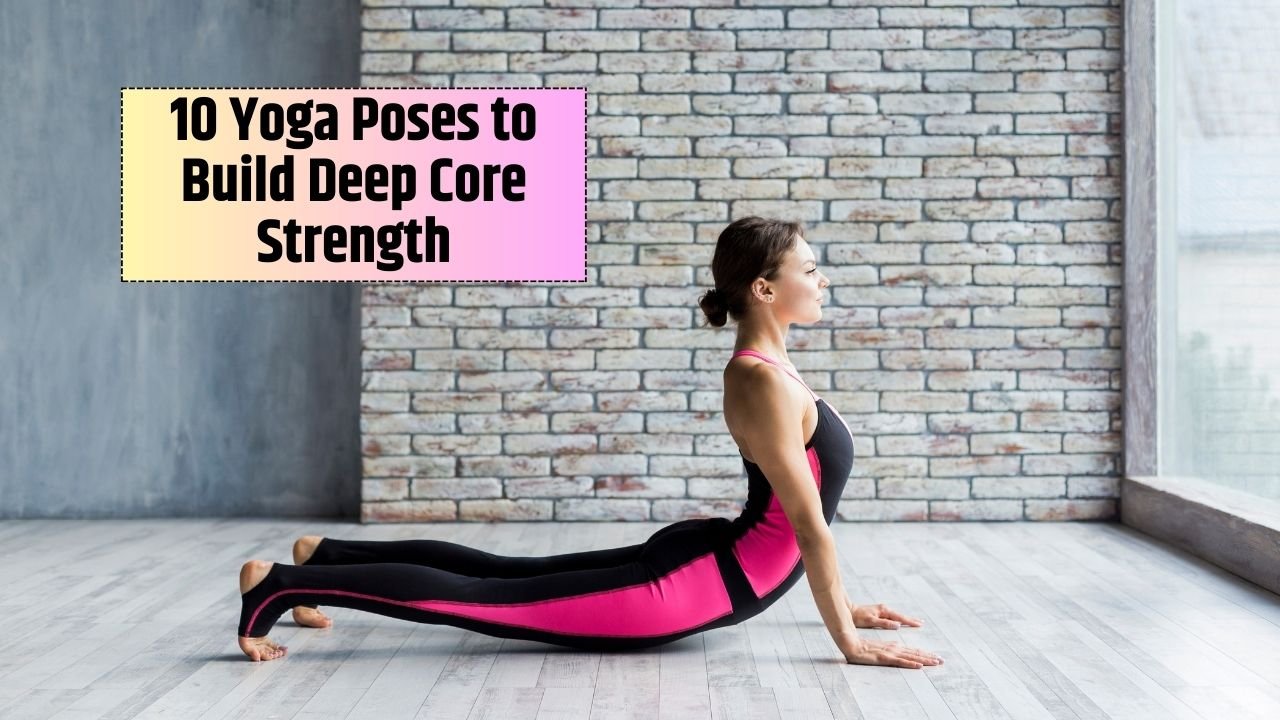
7. Cobra Pose (Bhujangasana)
Core strength isn’t just for the front body, and this is where Cobra steps in. It nurtures the spinal muscles that keep Americans upright, especially in an era where forward-leaning posture has become the modern tax on productivity. Even the National Institutes of Health notes that poor spinal mechanics contribute to widespread musculoskeletal complaints.
How to do it:
- Lie on stomach
- Hands under shoulders
- Lift chest with elbows bent
- Keep shoulders down
It’s gentle, restorative, and surprisingly strengthening.
8. Chair Pose (Utkatasana)
Chair Pose is that long, breathy moment when your thighs start burning and you wonder why you signed up for this class. But underneath that discomfort is a potent blend of abdominal activation and postural training.
How to do it:
- Feet hip-width
- Sit back as if into a chair
- Raise arms overhead
- Shift weight into heels
Keep your spine neutral, not arched.
9. Bridge Pose (Setu Bandhasana)
Bridge looks like a break, but it’s anything but. It activates the glutes—the often-lazy muscles that should be supporting your lower back. When done with intention, Bridge helps recalibrate pelvic alignment, something physical therapists consistently highlight in recovery programs.
How to do it:
- Lie on back
- Bend knees
- Lift hips
- Engage glutes and core
Use a yoga block under the sacrum for support when needed.
10. Seated Twist (Ardha Matsyendrasana)
No core routine is complete without twists. They build rotational strength, tone the obliques, and improve thoracic spine mobility. Think of them as maintenance work for your mid-back.
How to do it:
- Sit tall
- Bend one knee and cross it
- Twist toward bent knee
- Lengthen spine with each inhale
Rotate through the spine, not just the shoulders.
How Yoga Builds Strength and Flexibility at the Same Time
Yoga isn’t interested in one-dimensional fitness. It doesn’t ask you to choose between flexibility and strength because the system was built to achieve both simultaneously. In fact, many public-health movement guidelines (see HHS physical activity recommendations at point to practices like yoga for their dual benefits.
Here’s a quick breakdown:
| Yoga Element | Strength Benefit | Flexibility Benefit |
|---|---|---|
| Plank-based poses | Builds core and upper-body endurance | Lengthens hamstrings and calves |
| Balancing postures | Fires deep stabilizers | Improves joint control |
| Backbends & twists | Strengthens spinal support | Enhances mobility and releases tension |
| Breath control | Engages core on exhale | Helps muscles relax more efficiently |
It’s this two-for-one quality that makes yoga stick. You’re not just looking stronger in the mirror; you’re moving better in your daily life.
And that’s the heart of it. A strong, flexible core isn’t about punishing yourself with hundreds of sit-ups. It’s about teaching your body to move with purpose—steadier, cleaner, and more intelligently. Over weeks of consistent practice, you’ll notice subtle shifts: improved balance, reduced back discomfort, heightened awareness of posture. These changes linger long after the yoga mat is rolled away.